No BPM — zero registration tax
Germany charges no registration tax at all. For a vehicle that would cost €30,000+ in BPM alone, this is the single largest saving.
German vehicle registration for Dutch residents
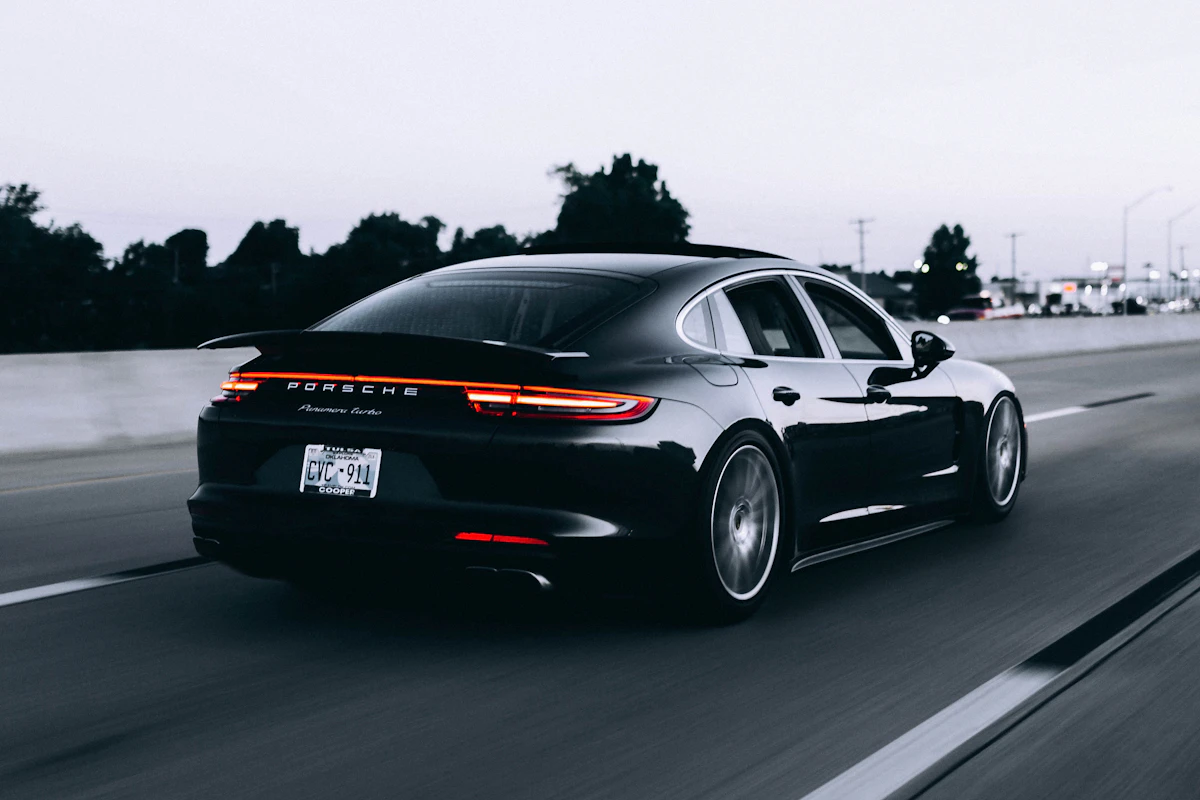
Dutch BPM on a Porsche 911 Turbo can exceed €40,000. On a Mercedes-AMG G 63, over €30,000. Register in Germany instead — where BPM does not exist — and keep the vehicle stored near Berlin for European trips.
Dutch residents · BPM avoidance · English & Dutch support · Germany
Last updated: August 2026 · This is general information, not legal or tax advice.
BPM is a one-time tax charged when a vehicle is first registered in the Netherlands. Germany charges no equivalent. The difference on high-value vehicles is dramatic.
| Netherlands | Germany | |
|---|---|---|
| Registration tax | BPM — €20,000–€50,000+ for high-emission vehicles | None |
| Annual road tax | MRB (motorrijtuigenbelasting) — weight + province based, high for heavy vehicles | Kfz-Steuer — typically €200–600/yr |
| CO₂ penalty at registration | Built into BPM calculation (exponential above 79 g/km) | None |
| Luxury surcharge | No cap on BPM for expensive vehicles | No luxury surcharge in Germany |
BPM amounts are vehicle-specific. Send us the listing and we calculate the exact comparison.
Germany charges no registration tax at all. For a vehicle that would cost €30,000+ in BPM alone, this is the single largest saving.
German Kfz-Steuer is based on displacement and CO₂. For a 4.0L V8, expect €400–600/year in Germany vs €1,500+ MRB in the Netherlands.
Indoor storage from €250/month. Fly into BER, collect your car, drive Europe, return it. ~35 minutes from Berlin Brandenburg Airport (BER).
Drive from Amsterdam to Berlin in under 6 hours. Or fly into BER in 75 minutes. Your car is always a short trip away.
Dutch tax authorities actively enforce rules against residents who use foreign-registered vehicles as their primary transport in the Netherlands. Driving a German-registered car as your daily vehicle in Amsterdam will trigger an investigation and potentially a full BPM assessment plus fines.
The arrangement must be real: the vehicle is stored in Germany, used for European trips departing from Germany, and returned to German storage afterwards. It is not a daily driver in the Netherlands that happens to have German plates.
No paper-only registrations. The vehicle must genuinely be based in Germany — stored, insured and administered here.
Requirements vary by vehicle and registration model. This is an orientation.
Between trips?

For Dutch owners who use their car for European road trips rather than daily commuting, indoor vehicle storage near Berlin from €250 per month keeps the car safe and ready. The registration stays active, the insurance stays coordinated, and the genuine German connection is maintained.
A listing link, VIN or the current Dutch kentekenbewijs is enough to start.
Residence, vehicle specification, intended use pattern and whether the German registration route fits.
We calculate the Dutch BPM for your specific vehicle alongside the German Kfz-Steuer so you see the real savings.
German motor insurance is arranged, the eVB is issued and the registration file is assembled.
The application is submitted and coordinated with the responsible Zulassungsstelle.
German plates, registration documents and ongoing correspondence, tax and renewals stay coordinated.
Contact us before you buy — not after.
Send us:
We calculate the BPM comparison and review the registration route before you commit.